
Introduction
India’s retail investor base has grown rapidly, with more people entering equity markets via online brokers. Two names dominate the conversation: Groww and Zerodha. While both offer online stock trading and investing, their approaches, fee structures, platforms, and target users differ significantly. This article presents a detailed, India-specific comparison of Groww vs Zerodha to help you choose the broker that aligns best with your investing/trading style.
Table of Contents
Comparison of Groww vs Zerodha
| Feature | Groww | Zerodha |
|---|---|---|
| Account opening | Free, fully online. (Groww) | Free online account opening. (Zerodha) |
| Equity delivery brokerage | ₹ 0 brokerage for delivery trades; other trades: lower of ₹ 20 or 0.1% per executed order. (Groww) | ₹ 0 for delivery trades. (Investor Gain) |
| Equity intraday brokerage | Lower of ₹ 20 or 0.1% of trade value. Minimum ₹5 in some cases. (Groww) | Lower of ₹ 20 or 0.03% of trade value. (Zerodha Support) |
| Futures & Options (F&O) | Flat ₹ 20 per executed order. (Groww) | Flat ₹ 20 per executed order. (Investor Gain) |
| Demat Annual Maintenance Charges (AMC) | Groww states zero AMC for standard users under its “zero-AMC” policy; verify for full terms. (Finology Select) | Typically around ₹ 300/year (excl. GST) for demat AMC for non-BSDA accounts. (Reddit) |
| Best for investor profile | Beginner investors, SIP/mutual-fund oriented, simple UI. | Active traders, derivatives users, advanced tools & diversified instruments. |
1) Company Overview
Groww
Founded in 2016, Groww began as a mutual-fund platform and expanded into equities, IPOs, ETFs, and derivatives. It emphasizes simplicity, mobile-first user experience, and is popular among new and younger investors.
Zerodha
Founded in 2010 by Nithin and Nikhil Kamath, Zerodha pioneered the discount broking model in India. It is one of the largest brokers by active clients, well-known for flat fee structures, transparent pricing, and strong trading platforms. Zerodha
2) Pricing, Brokerage & Key Charges (Updated)
Groww
- Account opening: Free and completely online.
- Equity delivery: Brokerage ₹0 for delivery (according to their site). For non-delivery trades: brokerage is the lower of ₹ 20 or 0.1% of trade value. Minimums such as ₹ 5 apply in some cases.
- Intraday trades: Brokerage lower of ₹ 20 or 0.1%.
- F&O trades: Flat ₹ 20 per executed order.
- Demat AMC: Groww has announced a “zero AMC” policy for standard users, though some articles note upcoming DP or service charges from June 2025 (minimum brokerage increase to ₹ 5, DP charges from ₹ 20 per sell transaction) so you should verify current terms.
- Other charges: They list DP charges, statutory & regulatory fees (STT, exchange fees, stamp duty) which apply in addition to brokerage.
Zerodha
- Account opening: Free (for individuals).
- Equity delivery: ₹ 0 brokerage.
- Equity intraday / futures: Lower of ₹ 20 or 0.03% of trade value per executed order.
- Options: Flat ₹ 20 per executed order.
- Demat AMC: Around ₹ 300/year (excl. GST) for standard accounts that don’t qualify for BSDA reduced AMC.
- Note: There’s commentary by Zerodha’s CEO signalling possible future changes to the “free delivery” brokerage model depending on regulatory headwinds.
What this means
- For long-term equity investors (buy, hold, delivery trades), both brokers offer zero brokerage for delivery trades, making cost differences minimal besides small AMC or DP charges.
- For intraday or high-frequency trading, Zerodha gains a cost edge thanks to the lower 0.03% rate vs Groww’s 0.1% (or minimum ₹ 5) in some cases.
- Always include “other costs” (STT, stamp duty, exchange fees) when comparing — see broker calculators. For example Groww has a brokerage calculator.
3) Platforms, User Experience & Trading Tools
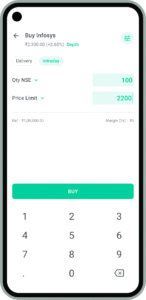
Groww focuses on simplicity. Its mobile app and website provide clean design, easy flows, and are ideal for beginners or SIP/investment-first users. Complexity (advanced analytics, algorithmic tools) is limited.
Zerodha offers the Kite platform (web + mobile), Console, Coin, and more. Advanced charting (TradingView/ChartIQ style), technical indicators, high-speed order execution, derivative instruments, and third-party tool integrations make it suited for active traders.
If you’re new and want ease-of-use, Groww may feel friendlier. If you trade more frequently, use advanced tools or derivatives, Zerodha likely gives you more depth.
4) Product Coverage & Investment Options
Groww supports stocks (NSE/BSE), F&O, mutual funds (direct plans), IPOs, and is growing its offering.
Zerodha supports stocks, F&O, commodities (MCX), currency derivatives, bonds, direct mutual funds (via Coin), and has wider instrument coverage.
If you plan to diversify beyond equity into commodities, currency, or bonds, Zerodha offers a broader product set.
5) Research, Education & Community
Groww provides beginner-friendly articles, help-center content, brokerage calculators.
Zerodha offers extensive education through “Varsity by Zerodha”, community forums (Z-Connect), robust help resources for traders. For those wanting to learn market analysis and stratified trading, Zerodha has an advantage.
6) Security, Regulation & Trust
Both Groww and Zerodha are registered stock brokers with the Securities and Exchange Board of India (SEBI), members of NSE/BSE, and depository participants with CDSL/NSDL. Client funds are held under regulatory norms. Zerodha’s longer operational track record adds a layer of trust, though Groww’s growth has been substantial.
7) Customer Support & Service
Groww: designed for retail investor flows. Support via in-app chat, email.
Zerodha: broader support (ticketing, phone support), extensive documentation, community forums — more suited to traders with complex queries.
8) Final Verdict & Which Broker Should You Pick?
Choose Groww if:
- You’re beginning your investment journey or focusing on mutual funds + long-term stock investments.
- You prefer a simpler user interface and fewer menus.
- You want minimal fuss and easy investing.
Choose Zerodha if:
- You trade frequently (intraday, F&O, derivatives) and need low costs, advanced tools, and broad instrument coverage.
- You plan to diversify across asset classes (commodities, currency, bonds).
- You’re comfortable with a steeper learning curve for more power and flexibility.
In many cases, even experienced investors use both: Groww for passive investing and SIPs; Zerodha for active trading.
Which Broker Is Right for You? Groww vs Zerodha
Find Your Ideal Stock Broker: Groww or Zerodha?
Answer a few quick questions to discover which broker fits your investing style best!
Final Recommendation
For beginner investors and mutual fund/SIP-focused users, Groww is typically the smoother, simpler choice.
For active traders, derivatives traders, and those needing advanced tools, Zerodha usually offers more competitive intraday/F&O pricing and a richer toolset.
Disclaimer
This article is for informational purposes only and does not constitute financial or investment advice. We are not associated, affiliated with, or authorized by Groww, Zerodha, or any financial institution mentioned. Brokerage rates, AMCs, account opening charges, taxes, and statutory levies change over time — you must confirm live rates and exact charges on the official broker pages before transacting. Investing and trading in securities involve risks; past performance is not indicative of future results. Consult a registered financial advisor for personalized advice.
This article is for informational and educational purposes only. It does not constitute financial, investment, or trading advice. We are not associated, affiliated with, or authorised by Groww, Zerodha, or any financial institution mentioned. Brokerage rates, AMCs, account opening charges, taxes and statutory levies change over time — you should verify live rates and exact charges on the official broker websites before making any trading or investing decisions. Investing and trading in securities involve risks; prior performance is not indicative of future results. Please consult a registered financial advisor for personalised advice.
Read more at DealTreats.com